Can You Mix OSA with Fertilizers and Pesticides? A Practical Compatibility Guide
One Tank, Multiple Inputs: Will Your OSA Mix Work Together?
Yes, orthosilicic acid (OSA) can be mixed with some fertilizers and pesticides, but compatibility depends on the exact formulations, application rates, water quality and product instructions. Check every label, verify the final spray pH and jar-test unfamiliar combinations. A successful jar test alone does not establish crop safety or maintained pesticide effectiveness.
One Spray, Many Inputs, One Big Risk
Combining nutrition and crop protection in one spray tank can save time, labour and application costs. However, products that work well separately may behave differently when mixed.
Poor orthosilicic acid compatibility can cause sediment, clumping, separation or gel formation. Other interactions may remain invisible while affecting pesticide performance or crop response.
The practical question is: can these exact products be mixed at the intended rates, using your water source? Product-specific guidance matters more than a general claim that OSA is “compatible.”
Why Formulation, Water Quality and Final Spray pH Matter
Orthosilicic acid 2% WSL supplies plant-available silicon in a stabilized liquid formulation. Its behaviour in a tank depends on the stabilization system, dilution and other ingredients.
Fenton’s published specification reports pH 1.9–2.1 for a 1% solution in distilled water at 20°C. This measurement does not represent the pH of every finished spray mixture. Actual tank pH depends on dilution, water alkalinity and the other products added.
Water hardness and temperature also influence mixing. Dissolved minerals can interact with certain ingredients, while cold water may slow dissolution.
Check both the source water and finished mixture. There is no single pH range suitable for every fertilizer, pesticide and OSA combination.
OSA Tank-Mix Compatibility: What to Check Before Mixing
The following chart is a screening guide, not a list of approved tank partners.
| Tank partner | Recommended approach | What to check |
| Water-soluble NPK fertilizers | Verify before mixing | Composition, concentration, final pH and product guidance |
| Foliar micronutrients | Use caution | Salt loading, formulation and visible deposits |
| Calcium-rich fertilizers | Request specific confirmation | Precipitation and formulation compatibility |
| Insecticides | Check exact products | Label restrictions, pH requirements and adjuvant instructions |
| Fungicides | Check formulation carefully | Acidification restrictions and crop suitability |
| Herbicides | Verify the complete application | Crop, timing, water quality and approved adjuvants |
| Strongly alkaline inputs | Obtain technical guidance | Conflicting pH requirements and formulation stability |
| Fixed-copper, lime or lime-sulfur products | Check acidification restrictions | Do not acidify where prohibited |
Fixed-copper fungicides and lime/lime-sulfur products need particular attention because acidification can be unsuitable. This is a reason to check the exact combination, rather than assume universal compatibility or incompatibility with OSA.
When using orthosilicic acid with fertilizer, remember that separate suitability for foliar application does not establish compatibility in one tank.
OSA + Super Spreader: When the Combination Makes Sense
A compatible silicon super spreader reduces surface tension and helps droplets spread across difficult-to-wet leaf surfaces.
Fenton’s OSA guidance recommends a wetting agent or surfactant. However, this does not approve every super-spreader grade, pesticide combination or application rate.
For OSA foliar spray mixing, confirm that the selected adjuvant suits the crop, pesticide, spray volume and final pH.
Use the specified rate. Increasing the adjuvant dose without supporting guidance can change spray behaviour and crop response. A spreader cannot correct an incompatible mixture.
Jar-Test Before Every New Mix
A jar test for tank mix checks for visible physical incompatibility on a small scale.
- Read every label and wear the specified protective equipment.
- Use a clean, transparent container and the actual spray water at a similar temperature.
- Calculate product quantities to reproduce the intended final spray concentration.
- Add products individually in the planned mixing order.
- Mix between additions, following product instructions.
- Observe immediately, then allow approximately 30 minutes before checking again.
- Look for persistent separation, sediment, clumps, gel, excessive foam or unusual heat.
Do not scale up a mixture showing incompatibility. Seek technical advice rather than adding another ingredient to correct it.
A uniform-looking mixture indicates no visible physical problem under those test conditions. It does not prove chemical effectiveness or crop safety. Where permitted, a small-area application trial can help assess crop response before wider use.
Right Mixing Order in the Tank
The correct order for an orthosilicic acid tank mix depends on every formulation involved.
Start with the water volume specified by the labels and establish agitation. Add each product separately, allowing it to dissolve or disperse before introducing the next.
Dry formulations commonly need time to disperse, but the exact sequence must follow product instructions. Add OSA, water conditioners and adjuvants at their specified stages.
Never combine undiluted concentrates directly. If label instructions conflict, obtain guidance before mixing.
Top up with water as directed, maintain agitation and check the final pH against all product requirements. Prepare only what can be applied within the permitted use window.
Frequently Asked Questions
Can orthosilicic acid be mixed with pesticides?
Yes, some combinations may be suitable. Compatibility depends on the pesticide formulation, OSA product, water conditions and application instructions. Fenton’s OSA guidance mentions use with pesticides/insecticides, but each proposed combination still requires verification.
Can OSA be mixed with NPK fertilizer?
Potentially, but “NPK” covers many compositions and formulations. Confirm the exact fertilizer, concentration and intended application with the manufacturers. Do not assume one successful combination applies to every NPK product.
Can OSA be mixed with calcium fertilizer?
There is no universal answer. Calcium concentration, fertilizer chemistry, dilution and the OSA stabilization system matter. Obtain product-specific guidance and check for physical incompatibility before preparing a full tank.
Should OSA go into the tank first or last?
Neither position is universally correct. Follow the instructions for the specific OSA formulation and all tank partners. Do not choose its position simply because it is a liquid fertilizer.
Is five minutes enough for a jar test?
Five minutes may reveal immediate problems, but delayed separation or sediment can appear later. Allow approximately 30 minutes for observation unless the product-specific procedure requires a different period.
Does a clear jar mean the mixture is completely safe?
No. A jar test primarily screens for visible physical incompatibility. It does not establish that pesticide activity is maintained or that the mixture will avoid crop injury.
What pH should an OSA spray mixture have?
Use the pH requirements of the exact products involved. Do not copy the OSA product’s specification directly into a tank recommendation. Measure the finished mixture and resolve conflicting requirements before application.
Can I increase the super-spreader dose for better coverage?
Follow the recommended rate for the crop and complete mixture. More adjuvant is not automatically more effective, and a higher dose does not resolve compatibility problems.
Should I repeat a jar test if the water source changes?
Yes. Changes in water source, temperature, product formulation or concentration can affect mixing behaviour. Reassess silicon fertilizer compatibility whenever important conditions change.
Planning a new OSA combination? Contact Fenton Chemical with the product names, formulations, application rates, crop and water details to request technical guidance.
More Blogs
View All →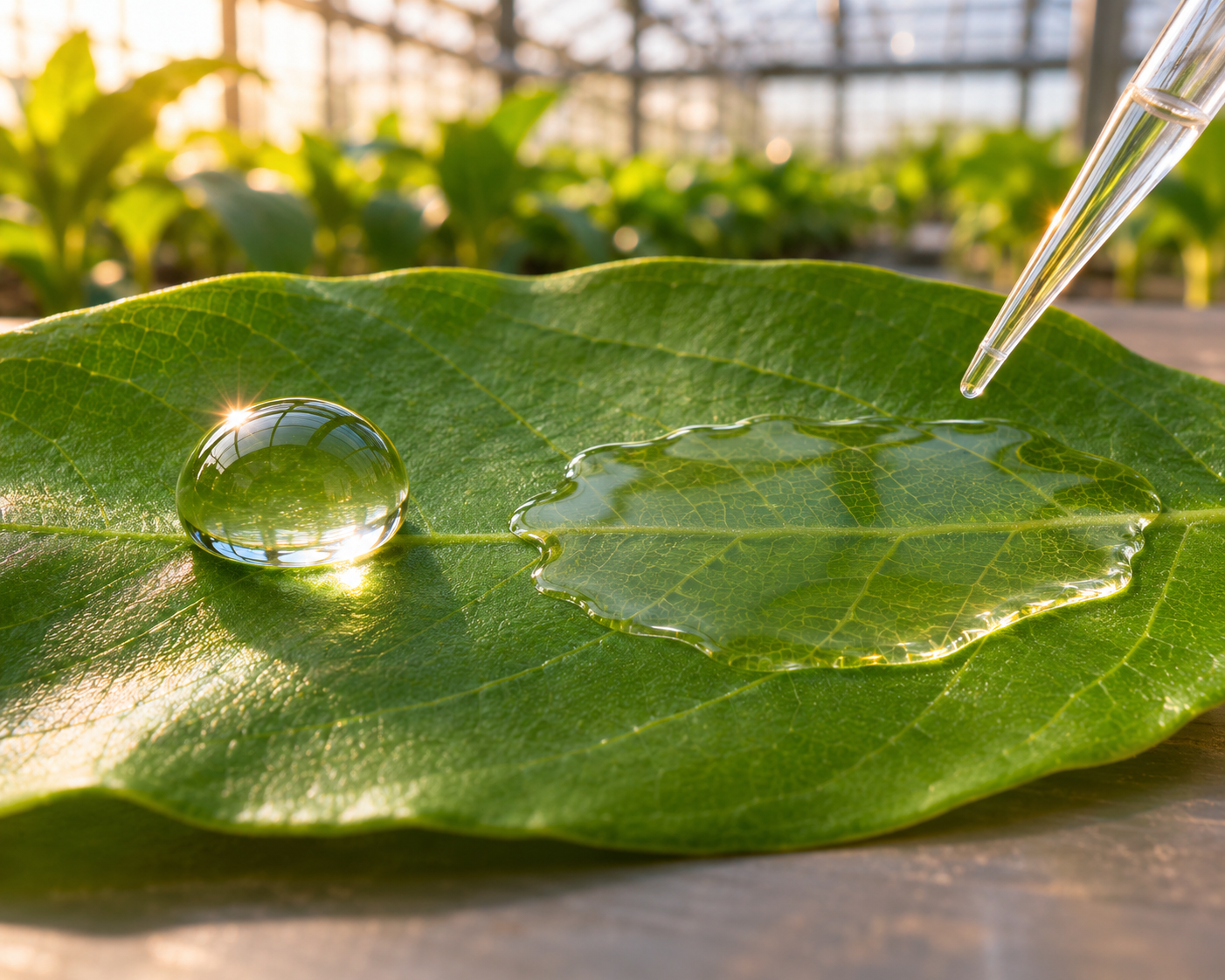
Is Your Super Spreader Fake? A Simple 30 Second Lab Test to Check Quality

OSA for Sugarcane: Delivering Silicon for Stronger Stalks and Better Recovery

Is Your Super Spreader Burning the Crop? Signs of Overdose and Safe Limits

The Silicon Toolkit for Modern Crops: Where OSA and Spreaders Each Fit

Matte, Gloss, Durable: How Additives Shape Paint Performance

The Adjuvant Mistake That's Costing Farmers Every Spray Cycle

The Farmer's Timing Guide: When OSA Actually Works Best