OSA for Rice Cultivation: A Season by Season Application Guide
A Practical OSA Application Schedule for Rice Crops
Walk through two neighbouring rice fields at harvest, and the difference is often easy to spot. One remains standing with well-filled panicles, while the other begins to lodge before the season ends.
That difference rarely starts at harvest. It develops much earlier as the crop builds its roots, stems, and leaves. That's why orthosilicic acid for rice works best as a season-long nutrition strategy.
This guide explains how OSA rice cultivation changes from one growth stage to the next.
Why Rice Needs Silicon More Than You Think
Rice has a habit that many other crops don't. It keeps taking in silicon as it grows. Little by little, that silicon becomes part of the plant itself, especially the leaves and stems. That's the reason rice is known as a silicon accumulator crop.
The plant does have one requirement. It can only use silicon after it becomes orthosilicic acid for plants. Without that soluble form, even a field that contains silicon may not supply enough for the crop when demand begins to rise.
The Complete OSA Application Timeline for Rice
Knowing that rice keeps taking up silicon is only one part of the story. The timing matters just as much. The plant doesn't need the same level of support from transplanting to harvest because its priorities keep changing as it grows.
That's why a fixed spray schedule rarely works for every field. A better OSA application schedule follows the crop itself. Each stage has a different purpose, and the role of a silicon fertilizer for rice changes along with it.
A. Nursery Stage: Building Strong Roots Early
A rice seedling doesn't have much room for error after transplanting. It either settles into the soil or spends the next several days trying to recover.
That's why many growers begin with OSA for seedlings instead of waiting for visible growth. This early silicon application gives young roots a better start, helping the crop establish itself before the season begins demanding more from it.
B. Tillering Stage: Where Stem Strength Begins
A rice plant begins shaping its future long before heavy panicles appear. Every healthy tiller adds to the crop's final yield, but it also needs the strength to support that weight later. This is where silicon for lodging resistance becomes important.
Many growers continue with orthosilicic acid tillering because the stems are still developing, even if the field already looks healthy.
C. Panicle Initiation: Setting Up for Grain Quality
By the time panicles begin forming, the crop has stopped thinking only about growing taller. Its attention shifts toward producing grain.
At this point, silicon plant nutrient support helps the plant manage that transition with less stress. Many growers continue OSA panicle stage applications because the harvest ahead is already taking shape, even if it isn't visible yet.
D. Flowering and Grain Filling: Locking in Yield
Once flowering is over, the crop isn't trying to produce more grain. It's trying to fill what it has already set.
Healthy leaves and strong stems keep that process moving, especially when the weather becomes less predictable. These are some of the orthosilicic acid yield benefits growers look for as the crop moves closer to harvest.
E. Pre-Harvest: Preventing Last-Minute Lodging
Some rice fields stay upright until harvest. Others begin leaning only a few days before the combine arrives. The difference often becomes clear when the panicles grow heavier.
That's why growers look for ways to reduce lodging in rice before the season ends. Good stem strength also adds another layer of silicon crop protection when the crop is carrying its maximum weight.
Foliar Spray or Soil Application: What Works Best in Paddy Fields?
Some situations call for a quicker response. Others reward patience. An OSA foliar spray fits those moments when the crop needs silicon without waiting. A silicon soil application rice programme stays available for longer, supporting the crop as it continues to grow.
That is why many growers rely on both rather than choosing only one.
Mistakes That Reduce OSA Effectiveness in Rice
Good results rarely depend on one spray alone. Many orthosilicic acid application mistakes happen when growers apply it too late or expect one treatment to support the entire season.
Formulation quality matters too. If the silicon isn't stable, the crop can't benefit from it the way you expect.
What Results to Expect and When
The first changes are usually easy to miss. A stronger crop often reveals itself little by little as the season moves forward. That's the orthosilicic acid results timeline growers should expect.
Better establishment comes first, followed by stronger stems and a crop that stays standing more confidently as harvest gets closer.
Conclusion: Building a Silicon Strategy for Your Rice Crop
Every rice season teaches something different, but one lesson stays the same. The crop responds better when silicon is available throughout its growth, not only after problems appear.
Choosing the right orthosilicic acid manufacturer is part of that approach because formulation quality matters as much as timing. When you finally buy OSA for rice, you're choosing a season-long strategy, not just another field application.
More Blogs
View All →
The Farmer's Timing Guide: When OSA Actually Works Best

How to Reduce Foam in Paint: The Hidden Cost of Bad Mixing
Foliar Spray Guide: How to Apply Fenosil OSA for Maximum Uptake

Debunking 5 Common Myths About Silicon Fertilizers in Agriculture
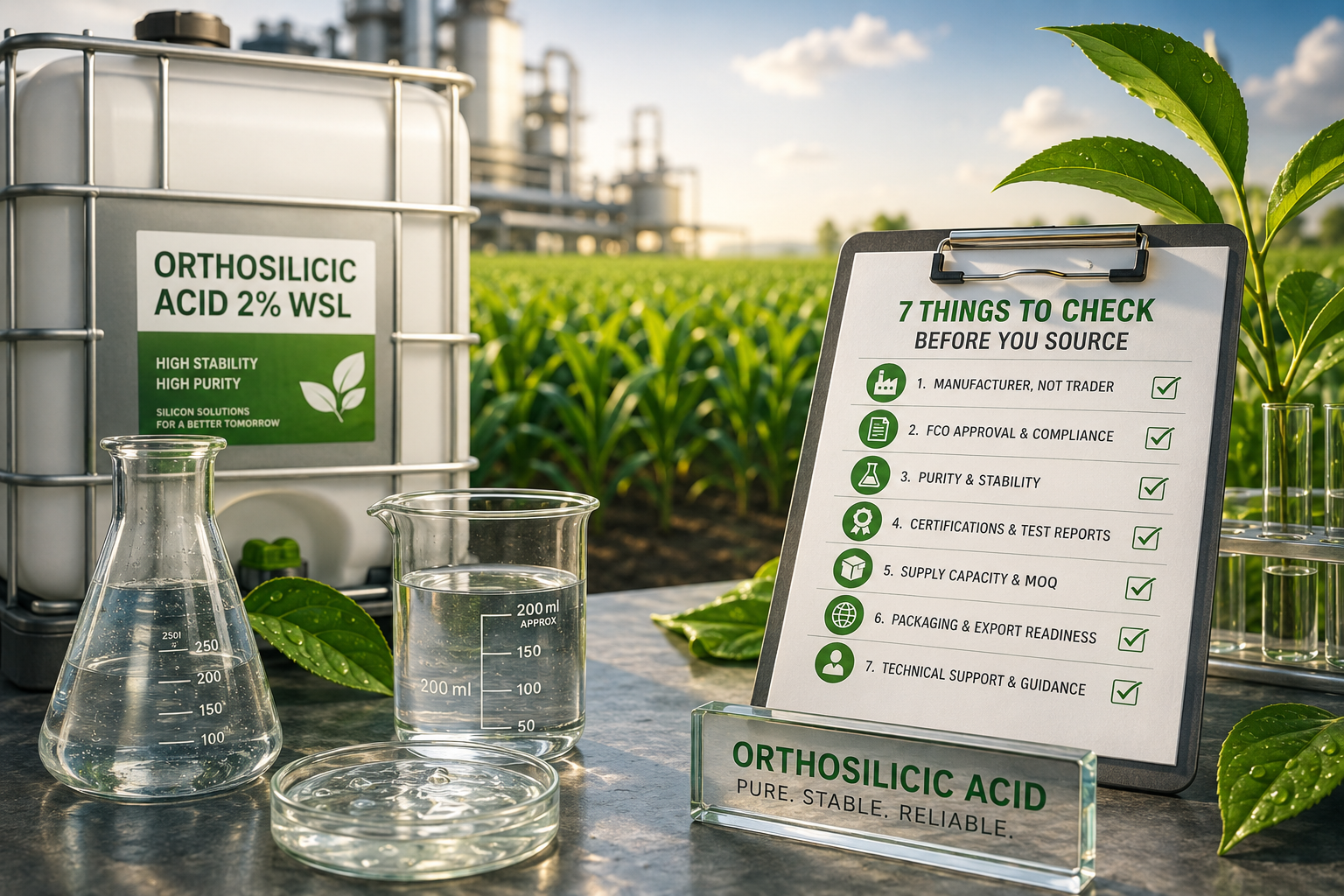
Orthosilicic Acid Manufacturer in India: 7 Things to Check Before You Source
Trisiloxane vs Polysiloxane Adjuvants: Technical Differences Every Formulator Must Know

What Is a Wetting Agent? Difference Between Wetter, Spreader & Sticker in Agrochemicals